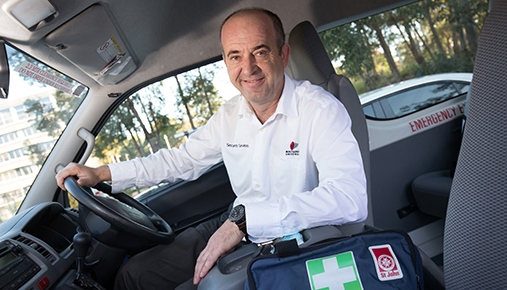
The Security Service operates 24 hours per day seven days per week throughout the year.
Card Readers (Magnetic Stripe, Proximity and Smartcard), Automatic Doors, Boom gates and Proximity Cards. Macquarie University uses a system called CARDAX. This integrated system schedules door opening times, grants and denies access to buildings, rooms and lecterns and also tracks the usage of access points. This system is installed in consultation with building users and Macquarie University Management areas.
If experiencing problems call x7145 or x7176 during normal office hours (Monday to Friday 8:00am to 5:00pm) or x7112 for emergency out of hours assistance
24 hour and after hours access is available to approved Cardholders via the Security Access Control System. Major buildings on Campus use swipe cards. Entrance to buildings after hours or at weekends must be arranged through the Dean of Faculty, Department or Office.
No person should work alone in a laboratory or other potentially dangerous area outside normal working hours without the approval of the relevant Head of Department AND without informing Security Services on x7112
Notify Security when entering and leaving a building after hours or on weekends.
Well marked Help Points are strategically placed across the University. Help Points should only be used in an emergency. Each Help Point has a Direct Dial telephone line to the Security Control Room. When you activate the Help Point by pressing the red button, it dials the Security Control Centre Emergency line and initiates a camera to lock on and commence CCTV recording.
If experiencing problems call the Security Control Centre on x7112 or 9999.
Contact the Security Office about your lost property.
Intruder alarms, duress alarms, equipment alarms, building systems alarms. Alarm systems are installed in consultation with building users. The systems restrict access to authorized persons only, reducing the likelihood of intrusion and theft. Persons accessing alarmed areas should familiarize themselves with alarm functions. Some of the systems autoset, however, others are designed to be set by users. These alarm systems are monitored 24 hours per day by the Security Control Centre.
If experiencing alarm problems call the Security Control Centre on x7112.
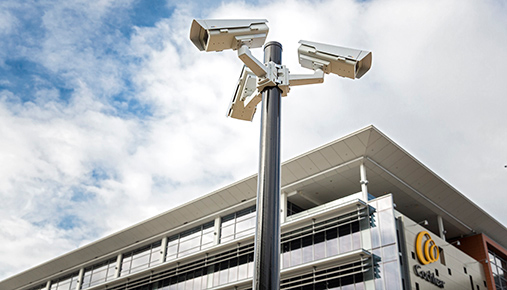
The monitoring of all cameras and any replay of recorded footage is controlled by Macquarie University Guidelines, the Code of Practice for the Use of Overt Video Surveillance in the Workplace, and the Workplace Video Surveillance Act 1998. To discuss the use of surveillance cameras at Macquarie University, call the Campus Security Manager on x7174 during normal office hours.
Security Services can also offer advice and training on the techniques for arming and disarming alarm panels. Advice can also be given on the responsibilities of the faculties/departments on stand alone alarm systems.
In addition, Security can offer support to faculties and departments requiring assessments or advice about new or replacement security stand alone systems.
A security review of an area can be requested by submitting a Service Request Form authorized by the Dean of Faculty or Heads of Department.
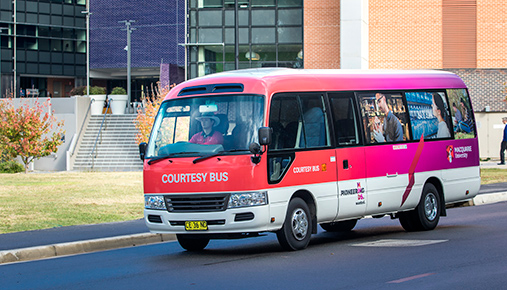
A security escort service is available for students and staff between 6pm and 6am, 7 days a week all year.
The escort service can be requested via the Macquarie University Security Office. It is recommended that you call in advance (if possible) because sometimes Security are unable to come immediately.
Please call ext 7112 or ext 7175 or any lift phone or Help Point.
Security includes recognizing the needs of victims of crime, emergencies, and incidents on campus, as well as maintaining a safe and secure campus. A primary victim is someone who has suffered physical harm, emotional trauma and/or personal or property loss from criminal activity or emergency. Examples of this are:
- A person who has had their car damaged by vandalism
- A person who has been assaulted while taking money from an ATM
- A person being assaulted while walking to their car at night
A secondary victim is someone who has witnessed a crime or is concerned for those who are victims and might be adversely affected by the experience: for example a bystander who witnessed a person being assaulted during a robbery attempt.
In 90% of cases, the first response Security will be able to advise and help victims. Security may refer victims to specially trained people on campus,
such as Student Counselling or for
staff Employment Assistance Program